
Introduction
In today’s fast-paced Automating workflows in DME industry, manual workflows can create unnecessary bottlenecks, leading to delays, increased errors, and strained resources. For DME providers, staying competitive means adopting smarter, faster, and more efficient processes. Workflow automation offers a powerful solution by streamlining repetitive tasks, improving accuracy, and freeing up valuable time for staff to focus on delivering exceptional patient care.
Why Automation is Essential for DME Providers
- Reduces Errors: Automated processes minimize mistakes in claims, inventory, and documentation.
- Saves Time: Eliminating repetitive tasks allows staff to focus on strategic activities.
- Improves Patient Experience: Faster processes ensure patients receive timely care and support.
- Boosts Revenue: Efficient workflows reduce delays in reimbursements and improve cash flow.
5 Key Workflows to Automate
- Patient Intake and Pre-Registration
- Challenges: Manual data entry can lead to delays, errors, and frustration for patients and staff.
- How Automation Helps:
- Digital forms allow patients to input their information directly.
- Automated systems verify insurance eligibility in real time.
- Impact: Reduces intake times by up to 50% and minimizes data entry errors.
- Claims Submission and Management
- Challenges: Errors or missing information in claims lead to rejections and delayed reimbursements.
- How Automation Helps:
- Automated claims tools validate submissions for completeness and accuracy before sending.
- Track claims statuses in real time and flag issues proactively.
- Impact: Decreases denial rates and accelerates cash flow.
- Inventory Tracking and Ordering
- Challenges: Overstocking ties up capital, while understocking affects patient care.
- How Automation Helps:
- Inventory management systems monitor stock levels and forecast demand.
- Automated reorder triggers prevent shortages or surpluses.
- Impact: Optimizes stock levels and reduces carrying costs.
- Appointment Scheduling and Reminders
- Challenges: No-shows and scheduling conflicts disrupt operations and impact patient outcomes.
- How Automation Helps:
- Automated scheduling tools manage availability and book appointments seamlessly.
- Send reminders via SMS, email, or calls to reduce missed appointments.
- Impact: Increases attendance rates and streamlines scheduling.
- Compliance Monitoring and Reporting
- Challenges: Keeping up with regulatory updates and ensuring documentation accuracy can be overwhelming.
- How Automation Helps:
- Compliance tools track regulatory changes and ensure adherence.
- Generate automated reports for audits or payer requirements.
- Impact: Reduces the risk of penalties and simplifies audit preparation.
How to Get Started with Workflow Automation
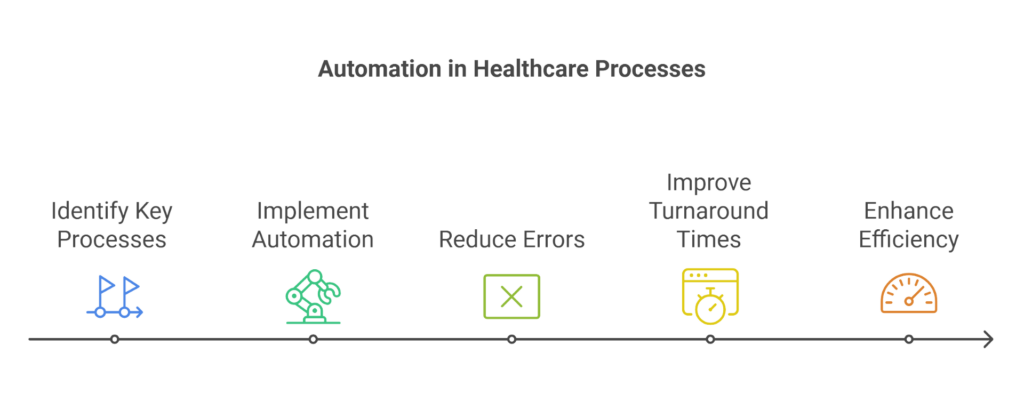
- Identify High-Impact Areas:
- Assess your workflows to pinpoint the most time-consuming or error-prone processes.
- Choose the Right Tools:
- Select automation platforms that integrate seamlessly with your existing systems.
- Train Your Team:
- Provide training to ensure staff can effectively use and manage automated tools.
- Monitor and Optimize:
- Track performance metrics to measure the impact of automation and refine processes.
Real-World Benefits of Workflow Automation
DME providers who embrace automation see:
- 35% Faster Claims Processing: Reducing delays and improving cash flow.
- 40% Time Savings: Freeing up staff to focus on patient care and growth initiatives.
- 25% Reduction in Errors: Minimizing rework and improving operational efficiency.
WWS Value Proposition
At WWS, we empower DME providers to optimize operations with:
- Automation Solutions: Streamline key workflows like claims, inventory, and patient intake.
- Integration Services: Ensure seamless connectivity between automation tools and your existing systems.
- Training and Support: Equip your team to maximize the value of automated workflows.
Partner with WWS to reduce manual tasks and enhance the efficiency of your practice

