
Introduction:
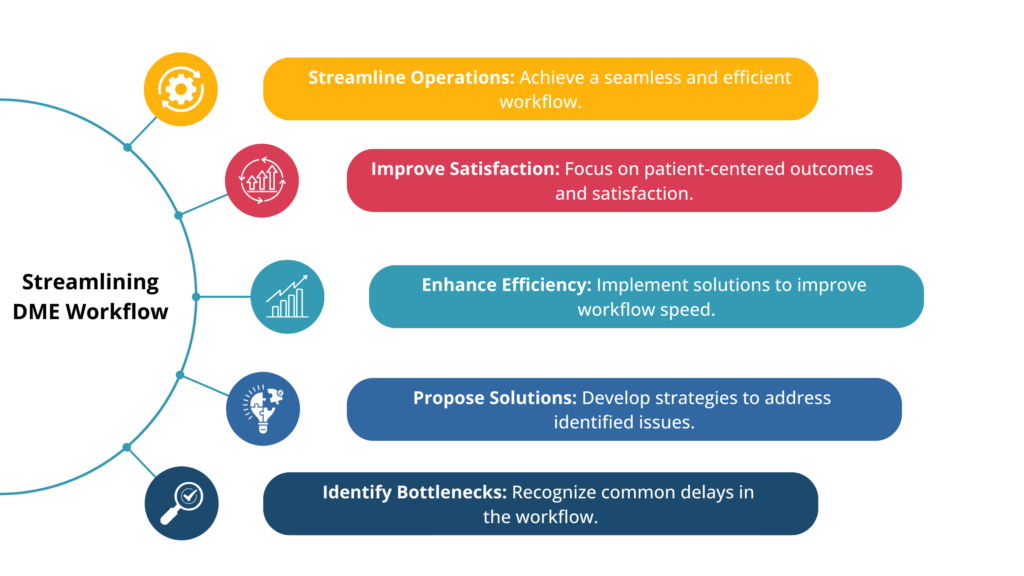
Operational bottlenecks can disrupt workflows, inflate costs, and frustrate staff and patients. For DME providers, these inefficiencies often manifest as delayed claims processing, inventory issues, or high administrative workloads.
This blog explores how to identify common bottlenecks in DME practices and provides actionable strategies to fix them, ensuring smoother operations and better outcomes.
What Are Operational Bottlenecks?
An operational bottleneck is any point in a process where delays, inefficiencies, or errors occur, slowing down overall performance. In DME practices, bottlenecks commonly affect:
- Patient Intake: Long wait times for document submission or verification.
- Claims Processing: Delayed reimbursements due to errors or missing information.
- Inventory Management: Overstocking or understocking essential equipment.
- Administrative Workflows: Manual, repetitive tasks consuming staff time.
Addressing bottlenecks is essential to ensure a seamless experience for both staff and patients.
Common Operational Bottlenecks in DME Practices
- Delayed Claims Processing
- The Problem: Claims are rejected or delayed due to errors or incomplete information.
- Impact: Slower cash flow and higher administrative costs.
- Inefficient Inventory Management
- The Problem: Inaccurate forecasting leads to overstocking or stockouts.
- Impact: Tied-up capital or patient dissatisfaction due to unavailability.
- High Administrative Workloads
- The Problem: Staff spend excessive time on repetitive tasks like data entry or follow-ups.
- Impact: Reduced productivity and potential burnout.
- Fragmented Communication
- The Problem: Miscommunication between departments or with patients causes delays.
- Impact: Poor patient satisfaction and longer turnaround times.
Steps to Identify Operational Bottlenecks
- Map Your Workflows
- Document each step of your workflows, from patient intake to claims submission.
- Use flowcharts to visualize where delays or inefficiencies occur.
- Monitor Key Performance Metrics (KPIs)
- Track metrics like claim denial rates, inventory turnover, and patient wait times.
- Compare these metrics to industry benchmarks to identify areas of concern.
- Gather Staff and Patient Feedback
- Conduct surveys or interviews with staff and patients to uncover pain points.
- Use their insights to identify gaps in communication, tools, or processes.
- Perform Time Audits
- Track how long specific tasks take to complete, such as insurance verification or billing.
- Pinpoint where excessive time is being spent and why.
- Leverage Analytics Tools
- Use analytics platforms to gain real-time insights into workflow performance.
- Identify trends and patterns that indicate bottlenecks.
Strategies to Fix Operational Bottlenecks
- Automate Repetitive Tasks
- Use automation tools for claims submission, appointment reminders, and document verification.
- Reduce errors and free up staff for more strategic activities.
- Streamline Communication
- Implement centralized communication platforms to improve coordination between departments.
- Use patient portals to provide updates and receive documents in real time.
- Optimize Inventory Management
- Adopt inventory tracking software with demand forecasting capabilities.
- Conduct regular audits to ensure optimal stock levels.
- Train Your Team
- Provide ongoing training to staff on workflows, compliance, and new tools.
- Empower employees to identify and address inefficiencies proactively.
- Set Measurable Goals
- Define specific, measurable targets for reducing bottlenecks, such as lowering claim denial rates by 20%.
- Regularly review progress and adjust strategies as needed.
WWS Value Proposition
At WWS, we help DME providers identify and resolve operational bottlenecks with:
- Workflow Optimization Tools: Streamline processes like patient intake, billing, and inventory management.
- Analytics Platforms: Monitor real-time metrics to uncover inefficiencies and drive improvements.
- Automation Solutions: Reduce manual tasks and increase accuracy across workflows.
Partner with WWS to eliminate bottlenecks and ensure seamless, efficient operations for your practice.