

Introduction:
Compliance errors in the DME industry can be expensive and damaging, both financially and reputationally. For one DME provider, outdated processes and gaps in compliance nearly resulted in a $50,000 penalty. However, by adopting proactive compliance measures, they turned things around—avoiding penalties, improving efficiency, and restoring patient trust.
This case study explores their challenges, the steps they took to improve compliance, and the lessons other providers can apply to protect their practices.
The Challenge
The provider faced several compliance hurdles:
- Incomplete Documentation: Claims were frequently denied due to missing or incorrect information, leading to reimbursement delays.
- Data Security Vulnerabilities: Outdated systems and inconsistent protocols left patient information at risk.
- Lack of Training: Staff were unaware of updated Medicare guidelines, leading to errors in billing and documentation.
- Missed Regulatory Updates: The practice lacked a system for tracking changes in compliance requirements, leaving them exposed during audits.
These issues culminated in a compliance audit that revealed significant gaps, putting the provider at risk of a $50,000 penalty.
The Solution
To address these challenges, the provider implemented a comprehensive compliance improvement plan:
- Automated Documentation Systems
- What They Did: Deployed software to ensure documentation accuracy, with built-in checks for payer-specific requirements.
- Results: Reduced documentation errors and claims denials by 40%.
- Enhanced Data Security Protocols
- What They Did: Upgraded systems with encryption, two-factor authentication, and role-based access controls to protect patient data.
- Results: Improved compliance with HIPAA standards and prevented data breaches.
- Staff Training Programs
- What They Did: Conducted monthly training sessions on Medicare updates, billing best practices, and data security protocols.
- Results: Increased staff confidence and reduced errors in claims processing.
- Regulatory Tracking Tools
- What They Did: Implemented software that monitored regulatory changes and sent real-time alerts for updates.
- Results: Ensured timely adjustments to workflows, avoiding future compliance risks.
- Regular Internal Audits
- What They Did: Scheduled quarterly audits to review documentation, billing, and security protocols.
- Results: Identified and corrected issues before external audits flagged them.
The Results
Within six months of implementing these solutions, the provider achieved:
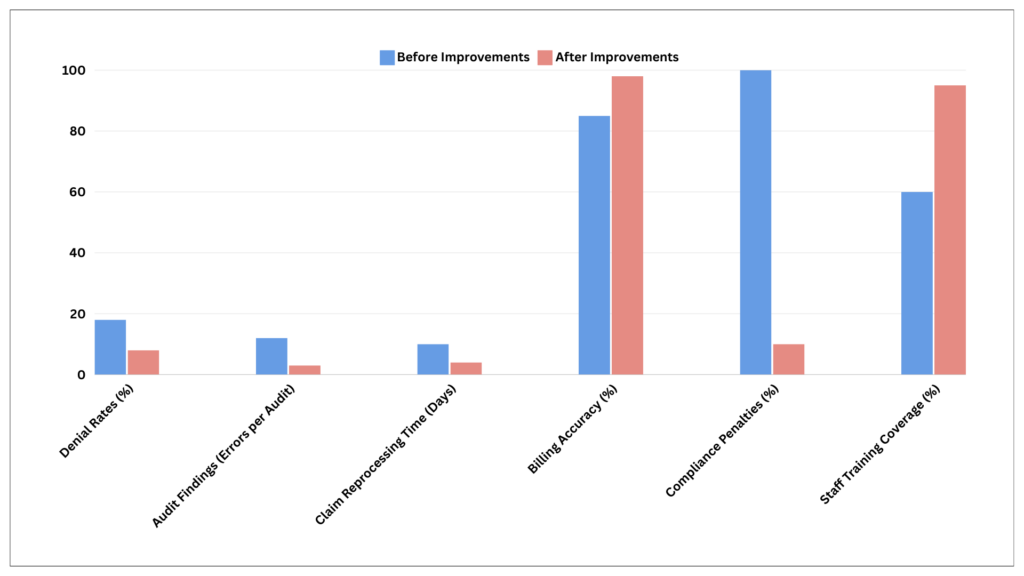
- Avoidance of $50,000 Penalty: Proactive measures resolved compliance gaps identified during the audit.
- 40% Reduction in Claims Denials: Automated documentation improved accuracy and adherence to payer requirements.
- Increased Staff Efficiency: Training and tools reduced time spent correcting errors by 30%.
- Improved Patient Trust: Enhanced data security and streamlined processes restored confidence among patients and partners.
Lessons Learned
- Proactive Audits Prevent Penalties: Regular internal reviews can identify and address compliance issues before they escalate.
- Technology is Key: Automation and monitoring tools are invaluable for staying ahead of compliance requirements.
- Invest in Training: Well-trained staff are the foundation of an effective compliance strategy.
- Monitor Regulations Continuously: A system for tracking updates ensures your practice remains aligned with industry standards.
WWS Value Proposition
At WWS, we help DME providers avoid costly compliance penalties with:
- Automated Documentation Tools: Ensure accuracy and reduce claims denials.
- Data Security Solutions: Protect sensitive patient information with HIPAA-compliant systems.
- Regulatory Monitoring Platforms: Stay informed about changes and adapt your processes seamlessly.
- Expert Training Resources: Equip your team to navigate complex regulations confidently.
Partner with WWS to strengthen your compliance practices and safeguard your practice from penalties and risks.