
Introduction:
In the Durable Medical Equipment (DME) industry, compliance isn’t just about following rules—it’s about safeguarding your business, protecting patient trust, and ensuring seamless operations. From HIPAA regulations to Medicare billing guidelines, compliance touches every aspect of your practice. This blog explores why regulatory compliance is crucial for DME providers, the risks of non-compliance, and strategies for staying ahead of evolving requirements.
What is Regulatory Compliance in DME?
Regulatory compliance refers to adhering to the laws, regulations, and guidelines that govern the DME industry. This includes:
- HIPAA (Health Insurance Portability and Accountability Act): Ensuring the privacy and security of patient health information.
- Medicare and Medicaid Guidelines: Following coverage, billing, and documentation rules for reimbursements.
- FDA and OSHA Standards: Meeting safety and quality requirements for equipment and workplace environments.
Compliance is essential not only for avoiding penalties but also for delivering safe, reliable care to patients.
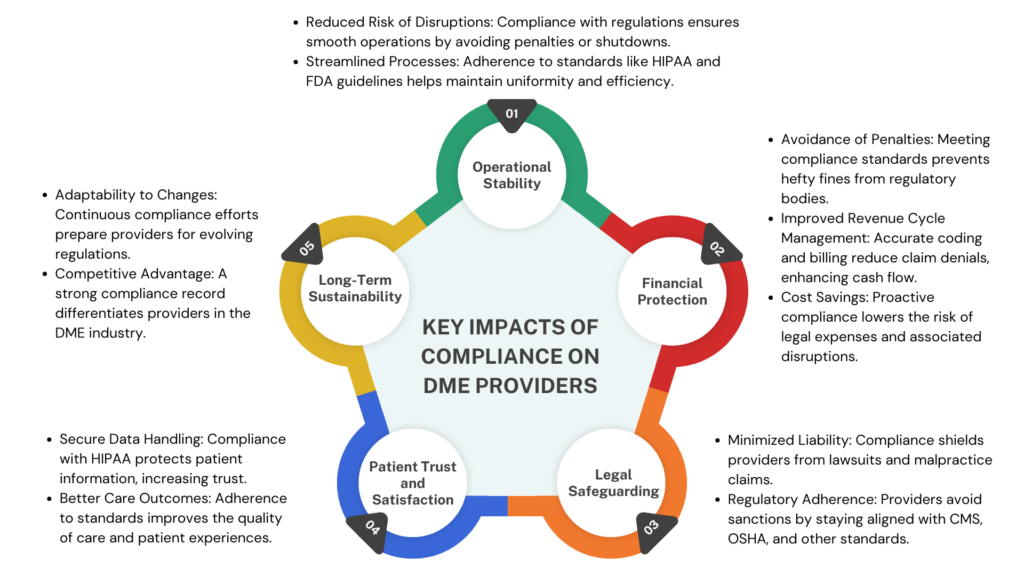
The Impact of Compliance on DME Providers
- Operational Stability
- How It Helps: Clear, consistent processes ensure smoother operations and fewer disruptions.
- Risk of Non-Compliance: Operational delays caused by audits, investigations, or corrective actions.
- Financial Protection
- How It Helps: Avoid hefty fines, denied claims, and repayment demands from payers.
- Risk of Non-Compliance: Penalties ranging from thousands to millions of dollars, depending on the violation.
- Patient Trust and Satisfaction
- How It Helps: Demonstrating compliance builds confidence in your practice and ensures patient privacy.
- Risk of Non-Compliance: Loss of patient trust due to data breaches or service disruptions.
- Reputation Management
- How It Helps: Compliance ensures your practice maintains a positive reputation within the industry.
- Risk of Non-Compliance: Negative publicity or loss of partnerships with payers and suppliers.
Common Compliance Challenges for DME Providers
- Complex Documentation Requirements
- Keeping up with payer-specific rules and documentation standards can overwhelm staff.
- Evolving Regulations
- Staying updated on frequent changes to Medicare policies or HIPAA requirements is a constant challenge.
- Data Security Risks
- Protecting sensitive patient information against breaches requires robust cybersecurity measures.
- Staff Training Gaps
- Ensuring all employees understand and follow compliance protocols demands continuous education.
Strategies for Navigating Regulatory Compliance
- Adopt Compliance Management Tools
- Use digital platforms to track regulatory requirements, automate documentation, and monitor adherence.
- Implement Regular Audits
- Conduct internal reviews to identify gaps in processes and address potential risks proactively.
- Invest in Staff Training
- Provide ongoing education on industry regulations and practice-specific protocols.
- Stay Updated on Regulatory Changes
- Subscribe to industry updates, attend webinars, or consult with compliance experts to stay informed.
- Focus on Data Security
- Use encryption, access controls, and secure storage to protect patient information in compliance with HIPAA.
WWS Value Proposition
At WWS, we simplify compliance for DME providers, offering solutions designed to:
- Automate documentation and billing workflows to reduce errors.
- Enhance data security with HIPAA-compliant tools.
- Provide training and resources to keep your team informed and proactive.
Partner with WWS to navigate the complexities of compliance and focus on what you do best—delivering quality care to your patients.

