Introduction:
Patient compliance is a cornerstone of success for DME providers, but barriers like unclear communication, financial constraints, and lack of follow-up can hinder adherence. These challenges not only impact patient outcomes but also create operational inefficiencies for providers.
This blog explores common compliance barriers in the DME industry and provides actionable solutions to address them, helping providers enhance patient adherence and satisfaction.
Top Barriers to Patient Compliance in DME
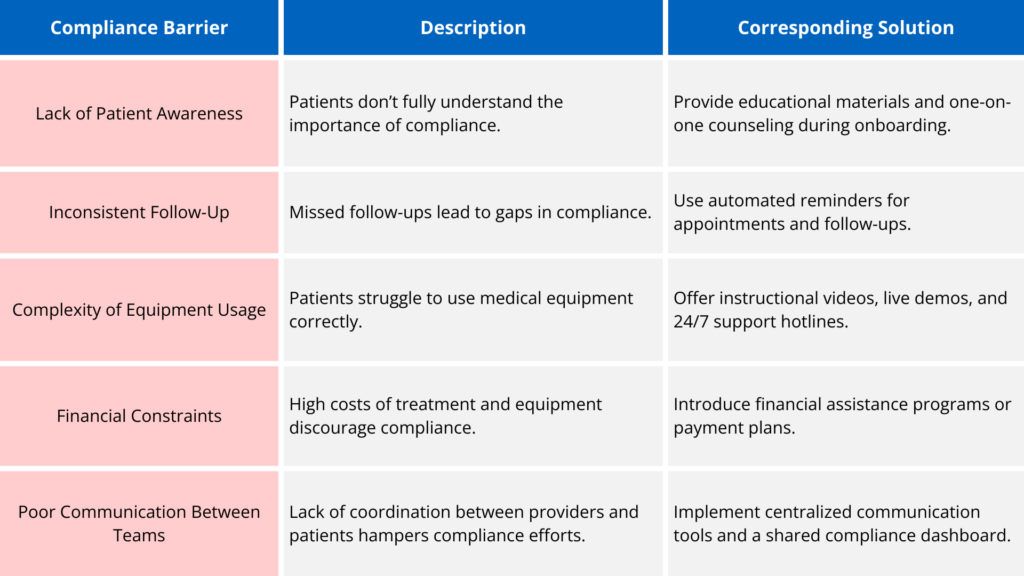
- Unclear Instructions
- The Problem: Patients may not fully understand how to use their equipment or why adherence is critical.
- Impact: Leads to incorrect usage, complications, and reduced treatment effectiveness.
- Cost Concerns
- The Problem: Out-of-pocket expenses for equipment or care can discourage patients from adhering to prescribed plans.
- Impact: Patients may delay or abandon necessary treatments.
- Lack of Follow-Up
- The Problem: Providers may not consistently check in with patients to ensure compliance.
- Impact: Patients feel unsupported and may deviate from care plans.
- Limited Access to Resources
- The Problem: Not all patients have access to digital tools or transportation for in-person appointments.
- Impact: Creates barriers to receiving timely care and information.
- Low Health Literacy
- The Problem: Patients may struggle to understand medical terminology or the importance of adherence.
- Impact: Increases the risk of non-compliance and worsens health outcomes.
Strategies to Overcome Compliance Barriers
- Simplify and Personalize Instructions
- Use plain language and visual aids to explain equipment usage.
- Provide instructional videos or step-by-step guides tailored to each patient’s needs.
- Address Cost Concerns Proactively
- Educate patients about insurance coverage and financing options.
- Offer flexible payment plans or discounts to alleviate financial strain.
- Implement Regular Follow-Ups
- Use automated reminders to check in with patients about their progress.
- Schedule periodic phone calls or virtual appointments to address questions and concerns.
- Leverage Technology to Expand Access
- Provide patient portals for 24/7 access to care plans and support.
- Use telehealth services to eliminate transportation barriers.
- Focus on Patient Education
- Offer workshops, webinars, or one-on-one sessions to improve health literacy.
- Include caregivers in education efforts to ensure patients have adequate support.
- Monitor Compliance Metrics
- Use analytics to identify patients at risk of non-compliance and intervene early.
- Track trends to refine strategies and improve outcomes over time.
Real-World Impact of Addressing Compliance Barriers
Providers who actively tackle compliance barriers report:
- 25% Improvement in Patient Outcomes: Clear instructions and consistent follow-ups lead to better health results.
- 30% Increase in Adherence Rates: Addressing cost concerns and access issues helps patients stick to care plans.
- 20% Boost in Patient Satisfaction Scores: Personalized communication and education foster trust and loyalty.
WWS Value Proposition
At WWS, we help DME providers overcome compliance barriers with:
- Automated Communication Systems: Ensure consistent follow-ups and timely reminders.
- Educational Tools: Simplify complex instructions with videos, guides, and workshops.
- Patient Portals: Provide easy access to care plans, documents, and support.
Partner with WWS to break compliance barriers and achieve better outcomes for your patients and your practice.